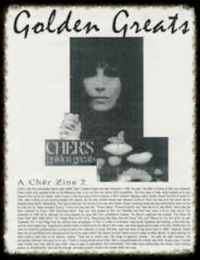
The All I Ever Need Is You album
 I was five or six years old and it was sometime in the mid-seventies when I plucked the All I Ever Need Is You record album from a stack my parents had in our living room. The two voices together on the record fascinated me. I loved the way they sounded: her voice cavernous, low and comforting, the high nasal harshness of his in contrast. To my childhood self, they epitomized established show biz. Little did I know, no matter what zenith of success Cher would reach – decade after decade, she would only ever truly epitomize a fringe popularity, the entertainment outsider.
Today, I see that this album represents a conglomeration of both qualities: a new slick show-biz act that had arrived, fueled by their not-so recent stint as entertainment outcasts. The mid-60s teeny-bopper hippies lost their footing in the landslide of psychedelic rock. Two movie flops, at least two record flops later, Sonny had a chip on his shoulder and a deep burn to prove all the critics were wrong when they counted S&C out. A new act was formed as a result, a glittery dress bought to disguise the dreary road they had traveled to get back in the game. And it all shows in the photographs. The album captures exactly what Sonny & Cher were about in the early 70s, down to the cover art.
Much of what makes this an important Cher album has to do with its timing and the events surrounding its release: a new look, a new sound, a new successful television variety show, a new record producer, and the biggest transformation, a new confidence in the voice and personality of Cher. Motherhood and a year or two of dues paid on the road in nightclubs gave Cher a new sound of conviction, sincerity and bravado.
A New Decade
Sonny and Cher were on the painful rebound from a disastrous foray into the movie business three years earlier. The 1969 Cher vehicle Chastity sank. And along with it sank $50,000 of their own money. According to varying sources, their back taxes that year ranged from $180,000 to $200,000. They had hocked all their furniture and their fridge had no food. Cher refused to sell their newly bought Tony Curtis mansion on St. Cloud in Bel Air with the elevator and Rolls Royce parked outside.
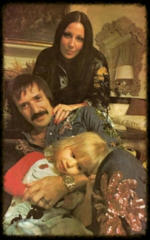 In March of 1969, their daughter Chastity was born and months later Cher completed an album in Muscle Shoals which flopped. As a result, Sonny decided to leave their record label Atco Records. Without a label to record on, Sonny revamped their act and pushed them out on the road, Chastity in tow. They played night clubs from 1969 to 1971. They spent one month at the Frontier Hotel in Las Vegas in July of 1969. Other Vegas gigs included The Sahara where they headlined and The Flamingo where they opened for Pat Boone. Their traveling show also took them across the country, from New York City to Canada as part of the Fairmont Hotel circuit.
All the while, Sonny was working to build a new following with this new act, which included both music and comedy. According to Cher biographer Mark Bego, old standards and Sonny & Cher hits were given what Bego calls “Rosemary Clooney arrangements.” Bego also accurately described the architecture of their comedy routine: Sonny as the charming buffoon; Cher as the glamorous bitch. Bego coined it The Nightclub Tour from Hell” due to the fact that Sonny & Cher had fallen from 20,000-seat venues like Madison Square Garden to small hotel clubs where they found themselves playing to no more than forty people most nights, often to hecklers who were just staying at the hotel or only in Vegas for gambling and cheap entertainment. The days of playing to screaming fans seemed to be over for Cher. In fact, her whole show-biz career seemed to be over.
Sonny was put off by the indignities of the new venues, having to walk through the kitchen to get to the stage while Cher had to put up with the verbal assaults of audience drunks. The guitarist in their band, David Hungate, described the audience as a purgatory “between the freaks and the straight people.”
A New Look and A New Sound
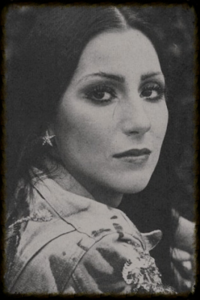 They were starting to look slick with their new costumes, which traded off-beat for glamour. This transformation was no small feat but they scrubbed up pretty good. And working in more adverse conditions forced Sonny & Cher to contend with their audience. Sonny was forced to interact with the crowds and Cher was there to watch. They most likely learned quickly from early mistakes. Cher was also able to refine her singing chops. As Ward Lamb put it in the 1999 issue of Goldmine Magazine, Cher was able to “practice her phrasing” and “hone her vowel-twisting singing style.” Cher biographer J. Randy Taraborrelli would agree. She became a stronger vocalist due to extensive work on the road, her voice maturing into a “controlled resonant contralto.” She began to sound a little less like a folk singer and a little bit more like Elvis Presley.
By 1971, Sonny & Cher were re-discovered by TV executive Fred Silverman. He placed them on a summer replacement variety show. Its popularity quickly led to the successful Sonny & Cher Comedy Hour on CBS. A hoard of designers descended upon Cher for the TV show. Where she used to do all her makeup for concerts herself, suddenly she had makeup artists. Suddenly she had help in all directions: a manicurist named Minnie Smith, a skin care man named Daniel Eastman and, in a historical pairing between clothing designer and star, Cher was assigned to work with the wildly creative Carol Burnett Show costume designer Bob Mackie who immediately put Cher in slinky gowns and high heels. Cher had to learn to walk in those heels.
Mackie is generally credited with helping transform Cher from the hodge-podge hippie into the sleek and exotic sex symbol. Cher didn’t feel exploited by this. On the contrary, she felt suddenly pretty. Mackie also brought out her sense of fearless fun. According to Mackie, Cher would wear anything. Outrageous clothes were her ticket out of self-consciousness.
Much of the success of the Comedy Hour had to do with their stunning new look, a hybrid of hip-glam. And the show was a rousing success, watched by about 25 million viewers each week. That was 35% of the viewing audience at that time. They were somewhere between Friends and American Idol. To compare, the highest rated show the week of 2/8/04 was the crime show CSI which pulled in 29 million. But amazingly, this only represents about 18% of the total TV audience today due to cable’s saturation of TV shows. Therefore, a bigger percentage of TV viewers were watching Sonny & Cher’s Comedy Hour every week than are now watching the highest rated network shows of today—more so by over 15 percentage points.
A New TV Show Begets a New Record Label
Some sources claim Sonny & Cher landed a new label before their TV show premiered. But according to Taraborrelli, it was based on the success of the TV show that Sonny was able to convince John Musso to sign Cher on the Kapp label, a division of Decca. Apparently Sonny knew Musso from the days of Caesar & Cleo when, as a radio promotion man, Musso schlepped the single “Baby Don’t Go” around to radio stations. Musso was also just leaving an executive position at Atlantic Records, its subsidiary being Atco and from which Sonny & Cher had just parted ways.
RCA had offered Sonny & Cher $50,000 to sign with them. Musso offered Sonny & Cher as much to sign with Kapp. Biographer Taraborrelli quotes Musso as saying “Decca thought I was nuts. Sonny & Cher hadn’t had a hit in years.”
In 1971, the first two Bono-produced singles flopped: first, the Vietnam war tragedy “Classified 1A” with the bitter b-side song, “Don’t Put it on Me” and then Paul Anka’s “Real People” with Sonny’s gospel “Somebody” on the flip side. The new singles had what was described as a Burt Bacharach sound.
Up to this point, Sonny had produced all but one of Sonny & Cher and Cher’s prior ten albums. But he had no new material to record by this time and no time to dedicate to producing a new record due to his busy TV-show schedule and live appearance obligations.
Instead of a new studio album, Musso suggested they record a live album in the West Side Room at the Century Plaza Hotel in Los Angeles. Ahmet Ertegun, the head of their old Atco label, graciously gave permission for them to record their old hits, which included “I Got You Babe,” “Laugh At Me,” “The Beat Goes On,” and “What Now My Love.” The live album went gold.
Then Musso got Snuff Garrett. Coincidentally, Snuff Garrett lived in the old Colleen Moore estate next door to Sonny & Cher in their recently bought Holmby Hills House off of Sunset Boulevard. This one, costing them $750,000, was allegedly furnished in 3 days.
Musso mentioned Snuff Garrett to Sonny as a possible producer for the next album. According to Cher biographer Taraborrelli, Garrett and Sonny had a marathon meeting at Sonny & Cher’s new house. Garrett saw the project as a challenge, saying “Cher was a novelty at that time. The two of them were not in good financial shape. They needed a hit badly.”
A New Producer
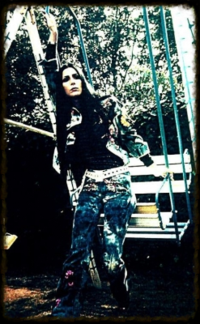 Tommy “Snuff” Garrett, assumed to have acquired his nickname after a brand of tobacco (or “snuff”) named Garrett Tobacco, made his career as a producer and A&R man for Liberty Records in the 50s and 60s. Originally from Dallas, he moved to Hollywood in 1958 to work at Liberty, where he developed a formula of using “snappy tunes written by Brill Building songwriters in New York City” (Taraborrelli). By 1961, he was head of A&R and hired Phil Spector to produce songs for Liberty. Garrett himself produced Johnny Burnette’s “You’re Sixteen” and throughout the 60s worked with Leon Russell and Gary Lewis and The Playboys, producing seven top ten hits for them. His yen toward Country and Western can be seen in a series of albums of western instrumentals he produced — one such album, called The 50 Guitars of Tommy Garrett, my parents had in their record collection.
Snuff Garrett had actually been at Liberty Records while Cher was signed with Liberty’s baby label Imperial. He claims to have been disinterested in her singles there. Garrett eventually left Liberty to strike out on his own with his Viva label. He didn’t have much success and sold it to Warner Bros for $2.5 million.
At that time, Garrett formed Snuff Garrett Productions with arranger/pianist Leon Russell. Cher had recorded two of Russell’s songs around this period, “Superstar” as a lone single in 1971 and “Song for You” on the Foxy Lady album in 1972 and had worked with Russell when Sonny & Cher recorded with the famed Wrecking Crew in L.A.
Over the years, Garrett worked with Eddie Rabbit, Burt Bacharach, Vicki Carr, Crosby Stills Nash and Young, Johnny Mathis, Jim Nabors, Liza Minnelli, Del Shannon, and Tanya Tucker, among others.
A week after meeting Sonny & Cher, Garret saw their act at the West Side Room in Century City. He was getting ready to record Cher for her first official comeback single. He figured Cher needed a narrative ballad, something like “Bang Bang.” “I was looking for something on the lines of “Son of a Preacher Man” which Dusty Springfield did. To me that was a song Cher could do,” Garrett said. According to Cher biographer Mark Bego, Garrett felt her deep and heavy voice had an ethnic quality and that her best work was in minor keys.
Garrett contacted Bob Stone, who understood what Garrett was looking for and came up with “Gypsys, Tramps and Thieves,” the huge comeback hit for Cher on her studio album Cher in 1971. Garrett’s work showcased a whole new sound for Cher, what Ward Lamb described in Goldmine Magazine as “a real polish in commercially elegant arrangements.” Bil Carpenter, also in Goldmine, agreed: “[Arranger] Al Capps cleaned up the arrangements and brought out textures of Cher’s dark voice.”
Garrett called Cher more of a stylist than a singer and of the session claimed “When we had the track done, Cher put her mouth on top of it. The session was quick, real quick. What a voice she had by this time. I remember thinking this woman can cut through a cement orchestra” (Taraborrelli). Many loved the new clarity in Al Capps’ arrangements and the new dramatic orchestral feel. Garrett was very proud of the record, stating, “I think “Gypsys Tramps & Thieves” is the best record I’ve ever done.”
The Sonny & Cher Comedy Hour was a hit on CBS which helped “Gypsys” land quickly on top of the Billboard charts. The record made three million by Garrett’s estimate.
Garrett’s next project was the Sonny & Cher album All I Ever Need Is You and this was to be Sonny & Cher’s comeback studio album as a duo. In no way was Sonny eager to turn over production responsibilities to another man after all these years, but he was too preoccupied with details of his TV show to take on the project.
Released in February of 1972, the album was a standout hit among Sonny & Cher albums, peaking at number 14 on the album charts. The only duet album to chart higher was Look at Us, their debut album, which reached #2. All I Ever Need Is You was certified gold and produced two top ten singles, “All I Ever Need Is You” and “A Cowboy’s Work is Never Done.” Cher biographer Mark Bego called it the best duet album of their career.
A New Approach to Cover Art
 Gone were the rambling and airy liner notes by Sonny & Cher, gone were the collages of candid photos of Sonny & Cher in their natural habitat. With art direction by Virginia Clark and design by Sandy Nelson, the cover art for this album was set on a light green background, detailed with calligraphy titles, a frame of two thin orange flowers, and Spartan wording—no thank yous, no dedications, not even a list of musicians who played on the album. The song list was set off demurely to the lower left side, overlaid on the back photograph.
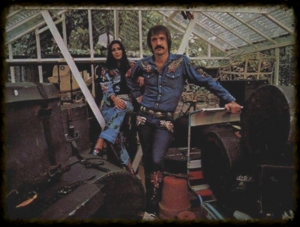
On the cover, photographer Tony Esparza shot Sonny & Cher posing casually inside their greenhouse. Only instead of plants, they are surrounded by band equipment in black cases. They were both wearing their complimentary embroidered jeans ensembles, Cher in light blue, Sonny in dark blue. Cher is sitting two steps behind Sonny, looking obedient with her legs crossed and head slightly tilted, while Sonny stands looking serious with one hand on his hip and the other loosely clutching the handle of one of the equipment carts. Sonny’s tennis-shoed foot is wedged against a few unused, upside down flower pots. These two are just too busy touring to plant flowers, although if you look past the rafters into the back of the greenhouse, there might be horticulture action happening after all. There’s a lot going on in this picture and when I was six or seven years old, I used to pour over it and wonder what was just beyond the glass walls and into the lush green yard.
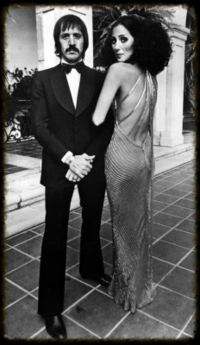
In contrast, the back photo was completely glamorous, a crisp, clear, color photograph of Sonny standing behind Cher’s right shoulder, his arms folded and with an intently stern stare. They both look starkly handsome, almost brooding. Cher is in a white halter top and long-slitted skirt with fringe along the slit and hanging down the bottom of the high-collared halter. It was an outfit she wore both on tour and on one of the torch segments of the Comedy Hour. Cher’s makeup makes her look almost gaunt.
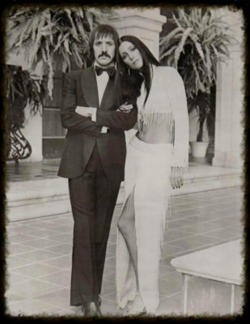 Here is an alternate take (right), with Cher looking more relaxed.
When I was little, I believed the patio they were standing on and the corner of the substantial fountain and the high arches with their gigantic hanging ferns were actually some fancy mall or airport or museum courtyard. Years later, I was flipping through a 70s-rag magazine with pictures of Chastity’s third birthday party and I recognized the fountain and the tiles. This was their house! There’s an eerily cold beauty about this house represented in this courtyard.
These album photographs usher in a new serious, less frivolous image for Sonny & Cher, a 70s ethos: you can never be too rich or too thin or too vogue. There’s a definite message in their eyes— harder, less accessible, and subtly defensive as if they’ve been burned and they are now standing before a comeback: united we stand, divided we fall. Their posture almost says “we’re back—in spite of you.” It also hints at a tougher personae for Cher that will soon be introduced. Unsmiling, deadpan, don’t-mess-with-me Cher. Something that was probably always there, but not shown under the happy hippie image of the 60s. According to Snuff Garrett, no image for Cher was ungenuine: “You never had to create an image for Cher. Cher was, is an image.”
New Players
All I Ever Need Is You was produced by Snuff Garrett for Garrett Music Enterprises. Enterprises seems to be a popular word in the 70s, Garrett Enterprises, Cher Enterprises. According to Cher, she wasn’t too surprised as she started divorcing Sonny and first learned about Cher Enterprises. She said people were always forming companies.
Al Capps was responsible for the crisp new contemporary arrangements. Apparently he was a very meticulous arranger, making sure every arrangement was written out ahead of time. He also arranged the album Cher in 1971, Foxy Lady in 1972 and Bittersweet White Light in 1973. Al Capps also worked with Sammy Davis Jr., The Everly Brothers, Robert Goulet, Gary Lewis and the Playboys, The Manhattan Transfer, Dean Martin, Johnny Mathis, Liza Minnelli, The Nitty Gritty Dirt Band, Frank and Nancy Sinatra, and Spiral Staircase.
A few songs were arranged by Michel Rubini. He arranged two of Sonny’s songs, “A Cowboy’s Work Is Never Done” and “Somebody” which was arranged as a single before this album was even made. “Somebody” was, for that reason, the only song credited as being produced solely by Sonny. Its incarnation earlier as a 45 had a slightly alternate ending.
Rubini actually played keyboards on Cher’s debut album in 1965 All I Really Want To Do, the harpsichord on the 1965 debut Sonny & Cher album Look At Us, and piano on the 1971 Sonny & Cher Live album. He also did arrangement work on Foxy Lady in 1972 and Bittersweet White Light in 1973. He also worked with Barbra Streisand on her Stoney End album, The Everly Brothers, Michael Jackson on his Bad album, Quincy Jones, Dean Martin, Harry Nilsson, The Nitty Gritty Dirt Band, Phil Spector, and The Righteous Brothers,
The album engineer was Lenny Roberts (mispelled Lennie on the liner notes) who with Sonny & Cher and Cher on various MCA albums from 1971 to 1974. He had also worked with Frank Sinatra, Liza Minelli, Bobby Sherman and The Brady Bunch among others.
Because the musicians were uncredited on the album, it is hard to say who the players were. Probable players may have included some of Snuff Garrett’s recommendations or some of the musicians playing with Sonny & Cher around that time.
Sonny & Cher’s Band
Musicians on their Live album recorded a few months earlier included: Michel Rubini on piano, Bert Fanette on organ, David McDaniel on bass, and Darrell Norris on percussion.
Glen D. Harden may have also played piano on the record. Before then, he also recorded with Elvis and Johnny Cash. Matt Betton played drums on the Live album. He also played with Jimmy Buffett and Hank Williams Jr. Dean Parks and David Hungate played guitars. Parks has worked with Joe Cocker, Neil Diamond, Aretha Franklin, Billy Joel., B.B King, Carole King, Madonna, Lyle Lovett, Dolly Parton, Roy Orbison, and Barbra Streisand among many others. In fact, Betton and Parks went on to become very prominent session musicians.
Hungate, on the other hand, switched from guitar to bass and went on to become a founding member of Toto. Toto was formed in 1978, when Hungate got together with David Paich (keyboards, vocals) — a veteran of Sonny & Cher’s second Live album in 1973, Steve Lukather (lead guitar, vocals), Bobby Kimball (lead vocals), Steve Porcaro (keyboards) and Steve’s late brother Jeff Porcaro (drums) — another veteran of Sonny & Cher’s band from 1973. In fact, three members of Toto worked together as part of Sonny & Cher’s live band in 1973. David Paich on keyboards, Jeff Porcaro on drums, and David Hungate on bass.
David Paich also worked with George Benson, Jackson Browne, Chicago, Joe Cocker, The Doobie Brothers, Les Dudek, Aretha Franklin, Don Henley, and Quincy Jones. Paich also appears on Cher’s Bittersweet White Light 1973 album and her 1991 Love Hurts album.
After working with Sonny & Cher, Jeff Pocaro worked as a popular session musician, drumming with Bruce Springsteen on his Human Touch album. He was still playing with Toto when he died suddenly at the age of 38. The cause of death was rumored to be pesticide poisoning, but was proven to be due to a heart attack brought about by hardened arteries from a prolonged use of cocaine. Pocaro drummed on Cher’s 1973 Bittersweet White Light album and her 1991 Love Hurts album.
Dan Ferguson also worked in Sonny & Cher’s live band in 1973 playing guitar, as did Dean Parks.
Any of these players could have been involved with the All I Ever Need Is You project. Although Snuff Garret claims that many tracks were cut while Sonny & Cher were out on the road, which may have tied up some of these very players.
Snuff’s Band
According to The Wrecking Crew documentary, Wrecking Crew session players worked on “Gypsys, Tramps and Thieves” on the album Snuff Garrett produced for Cher in 1971, so it’s conceivable that they played on this album as well. The Wrecking Crew also played on “Half Breed,” “The Beat Goes On” and “I Got You Babe.” It’s possible drummer Hal Blaine (who also worked on Cher’s Stars album) and bassist Carol Kaye (whose web site alleged that she taught David Hungate) were involved.
New Material
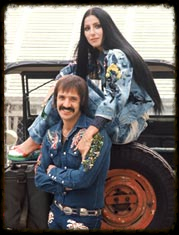 What works well about this album is the material’s collective feel. All the songs sound as if they belong together on one album of slightly western, a little bit Vegas, middle-of-the-road, adult contemporary pop. Garrett claims that most of the songs only needed two to three takes to get what he wanted. Because most of the tracks were laid down while Sonny & Cher were off doing TV work or live shows, Cher was not in the studio when the instrumental tracks were recorded. Allegedly, she learned her lines on the spot.
Although Sonny was around joking with the musicians and helping Cher with her phrasing, Garrett had complete control in the studio, and according to Taraborrelli, ran the studio like a dictatorship. This couldn’t have been a new experience for Cher who spent the bulk of her recording career with svengalis Phil Spector and Sonny Bono. And, as usual, Cher recorded her vocals alone. Due to her acute self-consciousness, no one was allowed to watch.
What did Cher think of the material? To Cher, the songs were standard commercial fare and she was neither eager or interested in the project. But because the Cher 1971 album turned out some runaway hits, it was difficult for her to argue with both Sonny and Garrett.
Side One: All I Ever Need Is You
Side one began with the title song “All I Ever Need is You” credited to Jimmy Holiday and Eddie Reeves. Reeves intended the song to be a medium tempo and had Kenny Rogers in mind. Rogers passed at the time. But he did record the song with Dottie West. His version went to #1 on the Billboard country charts in 1979. “All I Ever Need Is You” was also recorded by Tom Jones, Chet Atkins & Jerry Reed.
According to Garrett, “Musso called and said he’d found this song on a Ray Charles record. That it was long, about five minutes.” Garrett liked the song and so did Sonny. They recorded it the night after they first heard it. The next day an acetate copy was sent to KHJ, a popular top 40 station in Los Angeles. The song was on the air within 24 hours. (Sonny & Cher have similar speedy recording-to-radio stories about the songs “I Got You Babe” and “Laugh At Me” ).
The single “All I Ever Need Is You” was officially released in September of 1971, although some sources have it being released in October. The song reached #7 on the Billboard Hot 100 in October 1971 and spent 15 weeks on the chart. It also went to #1 on the adult contemporary Billboard chart. In the UK, the song was released in October of 1971 and it peaked at #8 in early 1972.
The singles released for All I Ever Need Is You alternated with the singles that were being released for Cher’s solo album Cher. “All I Ever Need Is You” was released in September of 1971. One month after “Gypsys, Tramps and Thieves,” which was released in August and went to #1. After “All I Ever Need Is You” was released as single, “The Way of Love” from the solo Cher album was released in January of 1972. It reached #7 in the charts.
“All I Ever Need Is You” begins with a subtle strut of an opening guitar strum and Cher comes in to the song “sometimes when I’m down and all alone, just like a child without a home” alongside a muffled heartbeat of a drum.
Cher’s new drawl is unveiled to the world again, along with her new vocal confidence. Violins come in smooth like a wind sailing around her vocals. In contrast, Sonny’s nasal singing comes closer to the note than on any other record. His best performance is on this track, still a bitter sound but less abrasive. His voice is somehow contained. And Cher’s voice is smoother now, which makes for a better contrast between them. This album showcases their new voices together.
This song sounds very adult contemporary 70s with the constant thumping heartbeat, a very 70s percussion and western horns. At this point, Cher’s vowels are still pretty much under control. Only one line is unclear: “wintaaahs come and they go and we watch the mayall-ting snow.” Her belting is newly refreshing on the record, particularly when she sings “build my world around you.”
The song even has some smooth spiritual lyrics: “Some men follow rainbows I am told/Some men search for silver, some for gold/I have found my treasure in your soul.”
There’s a very comforting, toe-tapping quality. Sonny is just trying to be cool in his performance, but Cher’s performance is emblematic of her performances in general. Her emotion is believable and genuine, but not sentimental. Her delivery is very “matter of fact,” to some degree filtered through a tough exterior.
Most critics misinterpret this quality of un-sentimentality as evidence that Cher is not connecting with the material. This is an incorrect interpretation. To fully appreciate Cher’s delivery style, it might help to equate it to her acting style. Her director in the 1988 movie Suspect, Peter Yates, praised her unsentimental delivery as an actress. He claimed his goal was to limit sentimental portrayals of his characters for a better sense of reality. Yates claimed this ability to keep sentimentality down to a minimum “comes through certainly in Cher’s performance.” And she consistently restrains any hint of sentimentality in her work, be it record performances, dramatic roles or stand-up comedy on The Sonny & Cher Comedy Hour. Her delivery again, often called “dead pan,” is actually another way of saying expressionless or expressed without sentiment. The deadpan, unsentimental performances do create a distance between the artist and the audience, but not the material. The connection with the material is hidden, passion is repressed and yet if you listen for it, you will find a hint of it, vamped by its suppression.
Here Comes That Rainy Day Feeling
 “Here Comes That Rainy Day Feeling” was written by Tony Macaulay, Roger Cook and Roger Greenway in 1970, who previously recorded the track as The Fortunes. This song begins with strident horns shadowed by strings. I can’t decide if this track is cheesy or fun. I definitely find Cher’s new sense of playfulness on the vocal charming. Sonny & Cher begin singing together. Cher sings nasally like Sonny. You can hear this most when she sings “like rain” and “took away my sunshine” and “baby in vain.” In fact, there is one line where I’m not sure who is singing, Sonny or Cher: the line that ends “but eating up inside girl.” There’s an odd, nasty tone about it. Sonny’s singing is undeniably nasally. He sings “Monday” like “moon-day.” But the tempo is fun, almost out of breath. This may just be elevator music, 70s style. Not their best duet, maybe comparable to many of their mid-show Comedy Hour duets.
More Today Than Yesterday
“More Today Than Yesterday” is credited to Pat Upton and previously recorded as a popular hit by Spiral Staircase. I love this one. Not your run of the mill love song. “I love you more today than yesterday/but not as much as tomorrow.” It’s about relativity! A trick. A truth. It’s a little Vegas showroom sounding, perfect for Sonny & Cher. In fact, the song was even lifted off their Live set. This is campy fun that works. The bass and drums and piano twinkling about. Cher singing “I’ll be spending time with you, you, you, you.” Amazingly, Sonny has the only voice in creation that Cher’s doesn’t overpower. His singing is very Vegas, especially when he does the über lounge bit emphasizing “lovin’ YOU.” All the while, Cher dances vocally around him; the song is very flirty. And when Cher sings “but not as much as tomorrow,” you believe her. Unsentimental but genuine.
Crystal Clear/Muddy Waters
This song is credited to Linda Laurie. It was released as a single in June of 1972. Probably my least favorite song on the album due to its heavy melodrama, this track was arranged by Michel Rubini instead of Al Capps. It’s an odd one starting with the medieval strum of the keyboard and Cher’s strong but obscure intro. There’s a good contrast of their voices here, however; and this is the first duet where we hear Cher’s new controlled belting. The song is a little bitter; Sonny’s voice often sounds downright mean-spirited. The horns in the song underscore his meanness and the unusual instruments, the Partridge Family keyboards. And the adult contemporary drums give the song a cold feeling. Strangely, I did love this song when I was seven. I loved the drama of the couple reconciling after infidelity. I imagined them reconciling in that greenhouse depicted on the album cover, rain pelting against the clear walls. Unfortunately, today I see that the “crystal clear/muddy waters” duality doesn’t quite make for a clean metaphor. It’s a foggy point the song is making. Cher: “rain, let it wash these muddy waters/and as those muddy waters rise/I’ll be staring into your eyes out of the rain.” Sonny: “It’s crystal clear you’ve been lying to me.” Muddy waters are supposed to represent her dirty lies, which Sonny sees through crystal clearly. So let it rain? It’s a good Cher performance, as a consolation. Good Cher wailing when she sings “let it raaaain.”
United We Stand
“United We Stand” was written by Tony Hiller and Peter Simmons and the best recording was made by Brotherhood of Man but it was also covered by Glen Campbell, Elton John, and Anne Murray. Sonny & Cher’s version isn’t bad, however. There’s a good vibe about this song from the beginning, as soon as Cher sings: “There’s nowhere in the world that I would rather be than with you, my love.” Right there, I’m convinced this is the best place in the world to be. The background singers with their “Ahhs” are cheesy, but Cher’s voice puts it right with violins and the horns shadowing her. The guitar accents the point the song makes, which is basically a defiant declaration of love to the world that is against them. Empowering strings sail around that declaration and the beautifully, smooth low Cher sound, contrasted with the higher, rough sound of Sonny. It’s an arrow to the heart, this one.
Side Two: A Cowboy’s Work Is Never Done
The only really brand-spanking new Sonny Bono song on the album, “Cowboy” was released as a single in January of 1972. Cher’s solo hit “The Way of Love” was also released in January of 1972, reaching #7 in January. “Cowboy” peaked at #8 in February on the Billboard hits chart, and #4 in March on the Billboard adult contemporary chart. The single charted in Germany as well, released in August of 1972 but reaching only #48.
Cher biographer Mark Bego called “Cowboy” “a cute novelty number” but it’s really more substantial than that. It’s an effective piece of western drama. Of all Sonny’s western metaphor songs, this one is the best, using the game of playing cowboy to illustrate the childhood to adult progression from innocence to experience. William Blake would be proud. The song begins Clint Eastwood style with The Good, The Bad and The Ugly‘s wah-wah-wah sounds. Then, a drum roll (a musical tumbleweed strolls across the frame), then punctuated horns (a cowboy comes strutting in, bow-legged, invincible). The bass is the stagger of the cowboy. Spanish horns echo the narrative, the strumming strings the horse. The rhythm section and percussion is effectively evocative of a western theme. There is a part in the chorus where the drums almost trip to illustrate the idea of the cowboy stumbling, losing his swagger as both he and the game age. Cher sings most of the lines as the voice of the cowboy’s girl. Sonny only sings to underscore certain lines. His singing of the last line is the only place where the song ever feels melodramatic. This is some of Sonny’s strongest lyric writing. He had been perfecting this innocence to experience metaphor for years (see also “Bang Bang (My Baby Shot Me Down)” ) but he nails it here. The song is full of 6-gun details and hyperbole: “I was so handsome women cried/and I got shot but I never died.” In the beginning, we think the song is about the unrequited love of a girl for her cowboy: “I could play if I’d do everything he’d say/Girls seemed to just get in his way/Those days we weren’t considered fun/A cowboy’s work is never done.” But then we come to the surprise: “He’d fight crime all the time; he’d always win/Until his mom would break it up…and call him in.” Ah! These are little kids and she’s just a little girl trying to horn in on all the cowboy fun. Then there’s the big gun shot to the gut, the mature realization that adult games cause pain, not fun: “Ride! I’d like to ride again someday/I think I’d still know how to play/I play games now but it’s not fun.” For more on western themes in Cher songs, see the first issue of the Cher Zine: Superpak Vol. 1, “The Gunslinger Ballads.”
Although it was a top ten hit, this song was not well-remembered, not getting nearly the degree of oldies, radio play as “Baby Don’t Go” and “The Beat Goes On,” two songs which reached similar heights on Billboard, #8 and #6 respectively. And this was to be their last hit song as Sonny & Cher.
I Love What You Did with the Love I Gave You
This is a fun song, written by team Laurie-Tucker. Although it’s one of my favorite Sonny & Cher songs and has been since I was seven, it’s not the best performance on the album. I love the horns and the rocky pace of the song. It’s very Vegas. But the violins are sappy, the drums are flat—very unexciting drums on this record. The lyrics go everywhere but nowhere: “What a song I’m singing now/You make such music in me now.” This is Sonny’s worst performance on the album. He sounds like he’s struggling to get his lines out. But the song does brings me back to early childhood when I sang into the jump rope handle in 1977 in my parents living room on Claudine Street in Albuquerque, New Mexico. So I forgive this track much.
You’d Better Sit Down Kids
Sonny remakes his own song from 1967 here. This time, instead of Cher confusingly singing the male part, Sonny does it solo. And amazingly, this Sonny-ized version has a lot to offer. It’s definitely a softer, gentler Sonny sound, controlled, palatable. This happened to be the first version of the song I learned. I thought Sonny sounded so sad with the swaying violins and Sonny’s new Vegas voice. Later I heard the original, which at first struck me as a needlessly weird gender-bender. It made no sense to have Cher do it, although her version has arguably groovier music, especially at the end. But Cher’s version is definitely less emotive, almost dispassionate and I would argue not quite the right material for her. Sonny’s version, on the other hand, is entirely sentimental. In fact the original Cher version proves the rule that she will consistently give an unsentimental delivery. It only works when a jaded distance in the song is acceptable. It doesn’t work when a song requires stripped emotion, like a parent conveying a heartbreaking message to a child. Sonny’s works in a way, in a “dad’s trying to sing” kinda way. It has that small theatrically that allows for his voice. I do miss the kick-in-the-pants exit to the future which the first version has. In that way, the original represents divorce musically how divorce catapults you into a cold life-goes-on future. But Sonny’s is a believable performance, culled probably not from his divorce from his first wife Donna and daughter Christy, and not, however tempting to believe, an eerie prediction of a divorce around the corner from Cher and Chastity, but his own parent’s divorce when he was a child. Which is the crux of the difference between Cher’s and Sonny’s versions. Sonny sings it personally. It’s his story. We hear his sad, slow heartbreak in the speech, especially when he sings “just remember I love you…I love you,” the lump-in-the-throat horns at the end, slowing to a stop. This is a very good divorce song, almost too clinically accurate. It was also covered by Dennis Diken and Jim Babjak of the Smithereens, Glen Campbell, Sammy Davis Jr, Liza Minnelli, Glen Cambell and Gary Puckett.
We’ll Watch the Sun Coming Up (Shining Down On Our Love)
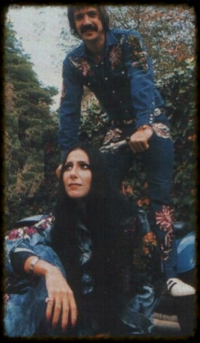 Written by Roberts & Welch, this song starts with Mexican horns. It opens like a sunrise on a Mexican honeymoon in some fern-covered patio, not unlike the one on the back cover of this album. In my seven-year-old mind, I could picture Sonny & Cher singing this song in their formal outfits out on that very patio. And I would sing along. After staying up all night due to being intensely in love, this couple watches “the sun coming up/shining down on our love.” This is romance I could get behind: in the now, free of promises and absolutes and yet hopeful, heart warming. I still hit replay every time I listen to the album. There are weak, cliched moments in the lyrics: “now I can see around the bend/we’re gonna find the rainbow’s end.” Cher’s performance is strong, but Sonny’s is lackluster. He could have done better. He sings like he’s reading the lines.
Somebody
This song, produced and written by Sonny Bono, was released as a single in May of 1971. It was incorporated into this album and released as a single once again in January 1972. The single credits Tony Bellafuccio as arranger, but this was a joke apparently. According to Denis Pregnolato, there was no such person. Sonny produced the song separate from the album but it slipped seamlessly in with the other songs produced by Snuff Garrett. There are basically three parts to the song. The first part is very soulful in sound and lyric. There’s the cool-cat piano and bass accompanying her and the self-referential lyric, almost a biography in a very small set of Cher song bios. You have only a handful of songs incorporating Sonny’s image of Cher and then the Prisoner album’s vision of Cher and Cher’s self-penned Not Com.mercial honesty. But these tidbits are merely drops in an ocean of material not biographically related to Cher.
It’s a beautiful gospel performance as she sings, “When I think about it now” and very hip when she sings, “I miss a forest lookin for the tree.” This whole idea mesmerized me as a child. Miss a forest for a tree? What could that mean? “Cos everything I want is next to me.” Now that, I understood.
The second phase of the song starts with a waterfall bass, dotted with nasally honks. The song steps up to this new level with drums and a repetitious ringing: “It aint power/ It aint freedom,” building up to “Can you dig it?/Can you dig it?” The saxophone kicks it up to another level, the third part. Here we are carried over into full gospel with the weight of the chorus, “Somebody—when you’re happy.” On my long playing record, a gospel choir comes in at the very end. This choir is mysteriously taken off on CD re-releases, on the single version, as well as many LP copies I’ve heard from those who have sent me bootlegs. A cryin’ shame, because there’s some superfine awesome wailing at the fade out of my parents’ old LP copy.
On this song, you start to see the difference between Sonny’s style (which is rougher) and Snuff’s (which is cleaner). There’s a messiness to this song. At the end you can’t separate out the instruments clearly. It’s a melting pot of noise versus the crystal clear sound of the “Gypsys” symlin. You don’t know what the hell a symlin is but it stands out.
For many reasons, “Somebody” is my favorite Cher song and has been for most of my life. It just keeps getting better and I love it from start to finish. It has my favorite Cher opening: “In a world of wonderland/one thing’s plain to see/and it don’t take no mystic mind at all.” I used to think Sonny meant that “it” was a very elemental principle, this Zen thing which was so plain to see. “Lots of people they’re looking now/and they’re searchin’ just like me/trying to find the answer to it all.”
But after finding out Sonny’s true political leanings and feelings about the youth movement in the 60s, I had to re-evaluate his attitude about the word “mystic.” Although Sonny supported kids in a vague way because they were big Sonny & Cher record buyers, he was already showing his conservative side and too-past-his-youthful-idealism to fully support counterculture initiatives involving drugs, free sex and the new psychedelic rock. See his lyrics in songs “Plastic Man” and material from his solo effort Inner Views to get a glimpse of the Republican that was yet to come. Sonny & Cher did support Democratic candidates in the 60s, but they were split on candidates by the end of the 70s and polar opposites by the 80s when Sonny began running for offices as a Republican. My new interpretation of his use of the word mystic: this was a subtle dig at hippy spiritual ideologies. But unless you know the songwriter’s back-story, the line is vague enough to remain open to interpretation and it can withstand a non-partisan reading.
Snuff Exits
The new adult contemporary sound matched their new image and their new audience, an older audience. Cher’s first comeback was sort of a reversal of her combacks to come, which always tended to attract younger generations of fans, the 80s hair band fans and the dance music fans of the 90s.
But for now, Cher’s comeback involved narrative ballads and adult contemporary pop. And soon, Sonny and Snuff began to struggle over the direction of Cher’s music. And Sonny was on a bit of an ego trip due to all the sudden success: the hit albums, the hit TV shows, the hit concerts. In truth, much of this success was due to the help of others: Sonny & Cher Comedy Hour producers Allan Blye and Chris Bearde’s team of technologically savvy editors, director Art Fisher, a talented staff of writers which included Steve Martin and a cast of actors which included Teri Garr. And then there was Snuff Garrett whose direction put Cher back on the pop-star map. But Sonny felt he played a key role in their comeback and he had residual feelings of bitterness over the treatment they had received after their late 60s music and movie career tanked. According to Snuff Garrett, Sonny had an axe to grind, a mean streak, and was probably an egomaniac to boot. In Taraborrelli’s biography of Cher, Garrett talks about the recording of “Cowboys,” and says, “There wasn’t a little bit of tension between me and Sonny. There was a lot. You could cut it with a knife.”
In fact, Sonny fired Snuff very dramatically after 1972’s Foxy Lady was released. Allegedly, the firing occurred on a Sonny & Cher chartered trip to Florida in their extravagant jet. While in Florida, Garrett and his wife, Yolanda, decided to leave the trip early to be with their daughter back home; but Sonny demanded they stay in order to keep Cher company. When Garrett refused, he was promptly fired as Cher’s record producer.
Without Garrett, Sonny’s efforts to produce Cher records had sad results. Both her 1973 torch song album, Bittersweet White Light and their last duet album, Mama Was A Rock and Roll Singer, Papa Used to Write All Her Songs (1973) were dismal flops, not even breaking the top 100 album chart and producing no hit singles.
The Half Breed Project: Snuff Garrett is Rehired
Soon Sonny & Cher were embroiled in a bitter split-up which had ramifications on the TV show and her albums. Sonny soon found working with Cher to be difficult. As soon as she decided to leave him, she decided to stop obeying him in the unquestioning manner he was accustomed to. She became inflexible regarding his demands and at some points flatly refused to do the amount of takes he wanted for a song. She simply walked out of the studio.
Denis Pregnolato, Sonny & Cher’s manager and “good people” according to Snuff Garrett, called Snuff and asked him to reconsider producing another Cher album. Snuff said, “My first instinct was a firm ‘no way.’ But then I thought about how much I really like Cher. She’s one of the cleverest people I know and her sense of humor was, is delightful. I also liked the fact that Cher was a quick learner.”
Snuff also recalls that he would send Cher demos ahead of time but she wouldn’t learn them. She would instead, wait until the day of the recording and learn the songs on the spot. Snuff called recording with Cher “a breeze.”
Snuff’s only requirement was that Sonny should be nowhere near the studio during recording. Sonny was not allowed to work on the 1973 Half Breed project. And this project produced a number one hit single and a #28 album. By the time the 1974 Dark Lady album was recorded, Cher was no longer with Sonny. This Snuff Garrett album also produced another #1 hit single and a #69 album.
In 1975, Cher was in a relationship with and being tutored by budding music mogul David Geffen who was helping her make the transition from pop to rock. Allegedly David Geffen pulled Cher from MCA and Garrett in order to broker a deal for her at Warner Bros to work with the likes of Phil Spector and Jimmy Webb.
Unfortunately her next two albums on Warner Bros. (Stars in 1975 and I’d Rather Believe in You in 1976) didn’t produce successful commercial results.
Before Cher left the label in 1978 to the disco and KISS label Casablanca, Warner Bros. tried to rekindle Cher’s pop career with narrative ballads. They called Snuff Garrett once again to recreate this magic. In December of 1976, they began working on the Cherished album which was issued in February of 1977 and produced one single, “Pirate,” which only made it up to #93 on Billboard. According to Garrett, it was too late to recapture that early 70s commercial sound. He says, “Cher wasn’ t into the album at all—she was beginning to want to sing rock and roll and they wouldn’t let her. She’d say, “This isn’t my bag anymore. I want to rock out.” When Taraborrelli asked Garrett about Cherished, he said, “It’s a nonentity to me.”
Cher claims that Waner Bros. never knew what to do with her or how to promote her. On a 1979 interview with Mike Douglas, Cher claims Warner Bros. seemed unaware she was ever on their label.
For years Cher wouldn’t sing any of her hits, including the Garrett singles, in her live shows. It wasn’t until the 1999 Believe tour and the 2002-2004 Farewell tour, the most successful tour of her career and the top grossing tour by a woman to that date, that Cher began to perform “Gypsys,” “Half Breed” and “Dark Lady” in a medley again. Snuff Garrett left the music business as the 80s rolled in and retired to his Arizona ranch.
Legacy of Snuff
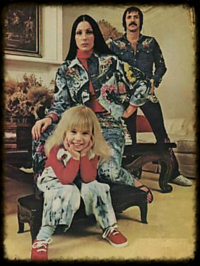 The All I Ever Need is You album is an important piece because it officially ushered in the new Sonny & Cher look and sound. This was the version of Sonny & Cher that captured a whole new legion of fans, old and young, to replace the late teen fans they had recently lost. We had already heard the new Cher on her 1971 solo album and we had already seen the new Sonny & Cher on TV. But in making a record album, the new image was officially set in stone and recorded. This album also reinforced the change seen in Cher’s solo album and became the signature, quintessential recording of Sonny & Cher in the 70s. ◙
(Cher Scholar, 2004)
Sources
Research Notes: If You Believe — Mark Bego; Cher — George Carpozi Jr; 1975 Magazine Cher TVs Dazzling Superstar; Goldmine December 31, 1999 — Ward Lamb; Goldmine, 1992 — Bil Carpenter; Cher — J. Randy Taraborrelli; Nielson Media Reseach (www.nielsenmedia.com); All I Ever Need: The Kapp/MCA Anthology liner notes by Todd Everett; AllMusicGuide.com
To purchase a copy of Golden Greats, Cher Zine Vol. 2 — email cherscholar@cherscholar.com for details.